Evaluating the causal impact of public policies is crucial in social science. The Difference-in-Differences (DiD) method is a prominent technique for this, comparing outcome changes in treatment and control groups. Key aspects include the parallel trends assumption, proper group selection, and statistical rigor, all essential for accurate policy evaluation and interpretation.

Economics
Understanding the Balance of Payments (BOP)
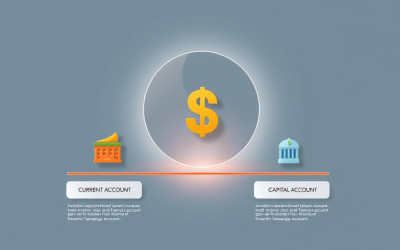
The Balance of Payments (BOP) summarizes economic transactions between a country and the world, encompassing the current, capital, and financial accounts. It tracks trade in goods and services, capital transfers, and investment flows. Errors and omissions adjust for discrepancies in data reporting, impacting economic health and policy decisions.
The Economics of Streaming: Netflix, Spotify, and You
The media consumption landscape has drastically changed over the past decade, with streaming services like Netflix and Spotify dominating. Subscription models provide predictable revenue, but competition drives platforms to offer exclusive content, fragmenting consumer access. While users benefit from consumer surplus, artists often receive minimal compensation, highlighting ongoing economic challenges in streaming.
Climate Change Economics : How Markets Can Save the Planet
Climate change isn’t just a scientific or environmental issue — it’s an economic one too. The choices we make about energy, transportation, food, and development are all deeply tied to the economy. And just like any other economic challenge, we can use policy tools to...
How Do Interest Rates Affect Me?
Interest rates significantly impact various aspects of life, including borrowing, saving, and employment. Central banks adjust rates to control inflation and stimulate the economy. Lower rates encourage borrowing and spending, while higher rates benefit savers. These changes influence loan costs, credit debt management, and overall economic sentiment, affecting purchasing power and financial decision-making.
Recession vs. Depression: What’s the Difference?
Economic downturns are a normal part of the financial cycle, but not all slowdowns are created equal. When headlines start throwing around terms like recession or depression, it’s easy to get confused—or concerned. So what exactly do these terms mean? And how do they...
Understanding Indifference Curves in Consumer Choice
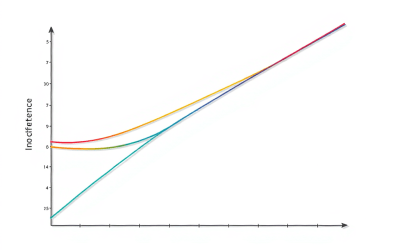
Indifference curves illustrate consumer preferences by showcasing combinations of goods that provide equal satisfaction, where consumers exhibit indifference between choices. Shapes of these curves vary: perfect substitutes are straight lines indicating a one-to-one substitution rate, while perfect complements are ‘L’ shaped, and zero utility products appear as horizontal lines indicating no willingness to substitute.
Theory of Production || Stages of Production || Economics
Production transforms resources into products, influenced by factors including input proportions and productivity. Four production factors exist: Land, Labour, Capital, and Organization, categorized as fixed or variable. The production function determines output from input combinations. Key concepts include total output, average product, and marginal product, with diminishing returns affecting efficiency.
Economic Demand Determining Factors with Special Cases
The market facilitates the interaction of supply and demand to establish equilibrium prices and quantities. Demand is influenced by commodity price, consumer income, substitute and complementary product prices, market size, income distribution, consumer behavior, speculation, and government policies. Demand and supply curves exhibit varying price elasticities for commodities and labor.
Understanding Perfect Competition: Key Assumptions and Examples
Perfect competition is a theoretical economic model characterized by price-taking firms, product homogeneity, free entry and exit, perfect information, and resource mobility, without government interference. While serving as an efficiency benchmark, it faces criticism for unrealistic assumptions and lack of innovation. Real-world markets often deviate from this ideal structure.